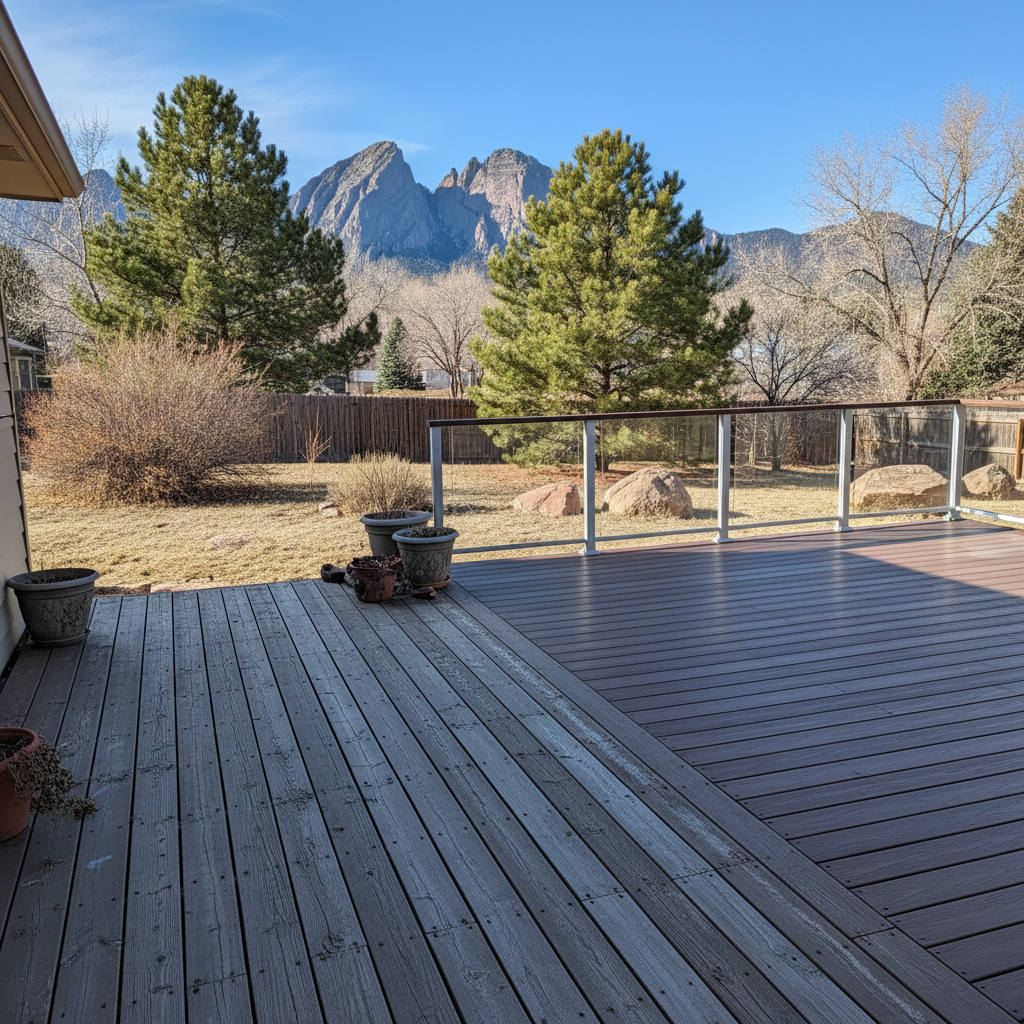
Alright, let's talk composite decks. You're probably looking at them because you're tired of staining, sanding, and splintering. Good call. Composite decking has come a long way, but not all composite is created equal. When you're shopping around, you're going to hear terms like 'capped' and 'uncapped.' What's the deal? Let's break it down, because for us folks in Boulder, this distinction really matters.
What's Uncapped Composite Decking?
So, uncapped composite is the OG. It's basically a mix of wood fibers and plastic resins, pressed together to form a board. Think of it like a dense, engineered wood product. The wood content gives it a more natural feel, but it also means it acts a bit more like wood in some ways.
- Cost: Generally, uncapped composite is going to be your more budget-friendly option upfront. It's less complex to manufacture, so it typically costs less per linear foot.
- Durability & Maintenance: This is where you see the biggest difference. Because the wood fibers are exposed to the elements, uncapped boards can absorb moisture. That means they can stain, especially from things like spilled wine, grease from the grill, or even mildew in our damp spring weather. They can also fade over time from our intense Colorado sun. You'll need to clean them regularly, and sometimes even power wash them gently to keep them looking good.
- Appearance: They often have a more matte finish, sometimes looking a bit more like natural wood. The color palette might be a little more muted compared to capped options.
What's Capped Composite Decking?
Now, capped composite is the newer, more advanced generation. Imagine that same wood-plastic core, but then it's wrapped on three or four sides with a protective polymer 'cap' or 'shell.' This cap is usually made of a different type of plastic, designed to be super tough.
- Cost: You're going to pay more for capped composite. That extra manufacturing step and the higher-performance materials mean a higher price tag. But, as we'll see, you're paying for peace of mind.
- Durability & Maintenance: This is its superpower. That polymer cap creates a barrier against moisture, stains, and fading. Spilled a glass of kombucha? No problem, just wipe it up. Grilling burgers? Grease wipes right off. The cap also offers superior UV protection, so your deck's color holds up much better against our high-altitude sun. You'll still need to sweep it and occasionally hose it down, but that's about it. No special cleaners, no scrubbing for hours.
- Appearance: Capped composites often come in a wider range of colors and textures, many designed to mimic exotic hardwoods or have a more refined, contemporary look. They can have a slightly more lustrous finish.
Boulder's Climate & Your Deck
Here in Boulder, we've got some unique challenges for outdoor materials. We get intense UV radiation from the high altitude, which can bleach and degrade materials quickly. We also get big temperature swings, from scorching summer days to freezing winter nights, which can cause materials to expand and contract. And let's not forget the occasional heavy snow loads and the freeze-thaw cycles that can really put stress on a deck.
I've seen plenty of uncapped decks around town, especially in older neighborhoods like Newlands, that have faded significantly or developed stubborn stains over the years. They just don't stand up to our climate as well without a lot of elbow grease.
My Recommendation for Boulder Homeowners
Look, I'm a straight shooter. If you're building a new deck or replacing an old one in Boulder, and you're choosing composite, I almost always recommend going with capped composite decking. Yes, it's a bigger investment upfront, but you'll save yourself so much hassle and money in the long run.
Think about it: less time cleaning, no fading worries, and a deck that looks fantastic for decades. For the kind of weather we get here, the protective cap is a game-changer. It's built to withstand our harsh sun, our snow, and everything in between. You want a deck that lets you enjoy our beautiful Colorado outdoors, not one that adds another chore to your weekend.
At Boulder Deck & Porch, we work with both, but we steer most of our clients towards capped for good reason. It just makes more sense for a low-maintenance, long-lasting deck that truly performs in our environment. You'll thank yourself later when your deck still looks great years down the road with minimal effort.