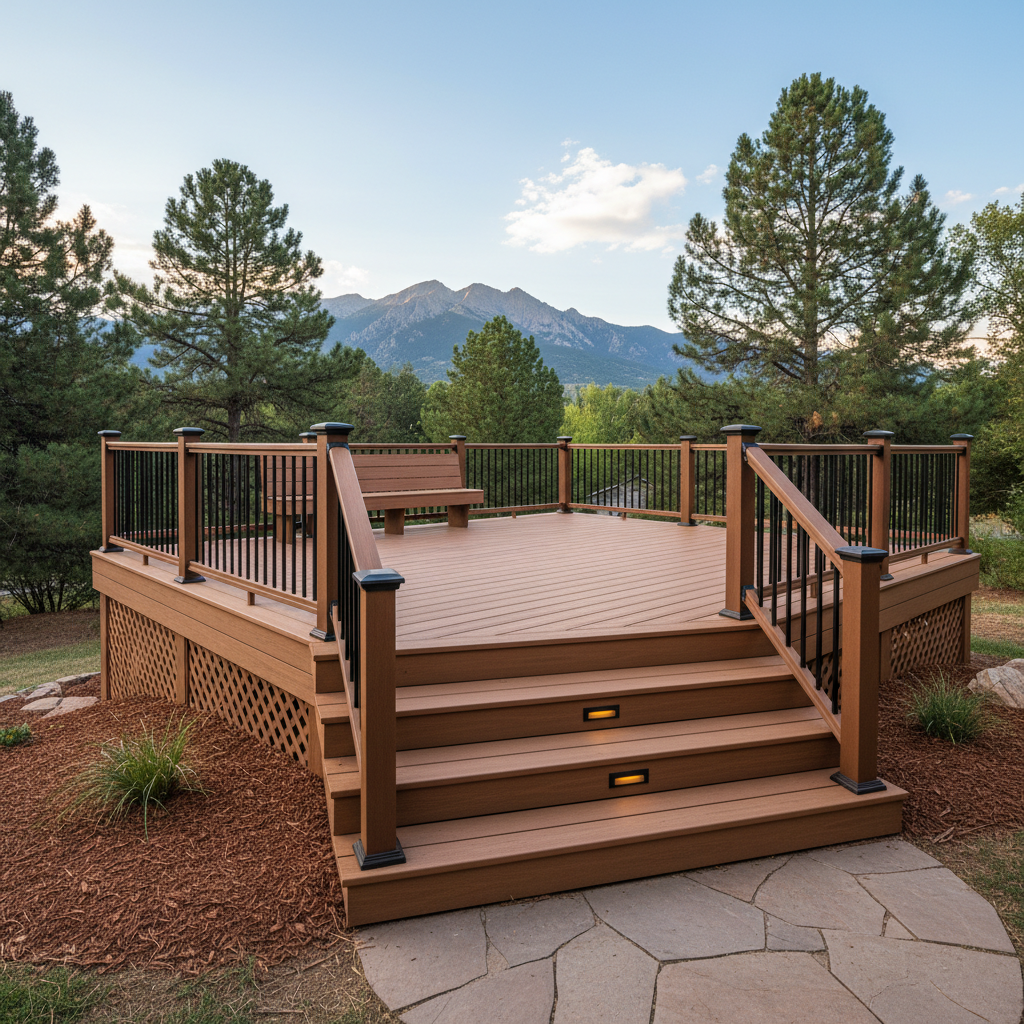
Alright, let's talk composite decks. They're a fantastic choice for Boulder homes – low maintenance, durable, and they look great. But I've seen enough projects go sideways over the years to know that it's easy to make some pretty big mistakes if you're not careful. You're investing a good chunk of change into this, so you want it done right. Here's what I often see go wrong and how you can avoid that regret.
Mistake #1: Focusing Only on the Decking Material Price
This is a big one. Folks see the price per square foot for composite boards and think that's the whole ballgame. It's not, not even close. The decking material itself is just one piece of the puzzle. You've got the substructure – the framing, the footings, the beams, the joists. That's the backbone of your deck, and it needs to be solid, especially with our freeze-thaw cycles here in Boulder that can really put stress on foundations. Then there's the railing, stairs, fascia, fasteners, permits, labor, and any special features like lighting or built-in benches. When you're comparing bids, make sure you're looking at the total project cost, not just the cost of the pretty boards. A contractor who breaks down the costs clearly is usually a good sign.
Mistake #2: Underestimating the Importance of the Substructure
I can't stress this enough. A composite deck can last decades, but only if the stuff underneath it is built to last just as long. I've seen homeowners try to save a buck by reusing an old wooden substructure that's already rotting or not up to code. That's a recipe for disaster. Composite boards don't flex like wood, so if your substructure isn't perfectly level and properly spaced, you'll get wavy boards, standing water, and a whole host of problems down the line. We're talking about proper joist spacing, correct beam sizing, and footings that go deep enough to handle our local soil conditions – especially if you're up in the foothills where things can shift. Don't skimp here; it's the foundation of your investment.
Mistake #3: Ignoring Local Building Codes and Permits
Look, nobody loves dealing with city hall, but it's non-negotiable. Boulder County has specific requirements for deck construction, especially concerning setbacks, height, and structural integrity. Trying to bypass the permit process is a huge gamble. If you get caught, you could face fines, be forced to tear down the deck, or have trouble selling your house later. A reputable contractor, like Boulder Deck & Porch, will always handle the permitting process for you. They'll know the ins and outs, what drawings are needed, and how to make sure everything passes inspection. If a contractor suggests skipping permits, that's a massive red flag. Walk away, fast.
Mistake #4: Not Vetting Your Contractor Thoroughly
This one seems obvious, but people still get burned. Don't just go with the cheapest bid. That's often a sign of cutting corners or inexperience. You want someone who specializes in decks, not a general handyman who does a bit of everything. Check their references, look at their past work – ask to see projects they've done in your area. Make sure they're licensed and insured. Seriously, ask for proof of insurance. If someone gets hurt on your property and they're not insured, you could be liable. A good contractor will have a solid contract, a clear payment schedule, and excellent communication. If they're hard to get a hold of before the job starts, imagine how it'll be if there's a problem during construction.
Mistake #5: Neglecting Proper Drainage and Grading
Water is the enemy of any outdoor structure, even composite decks. If your deck isn't designed with proper drainage in mind, you're asking for trouble. Water pooling around the footings can lead to erosion, shifting, and even damage to your home's foundation. This is especially true for walk-out basements common in some Boulder neighborhoods. Your contractor should assess your yard's grading and plan for water to flow away from the deck and your house. Sometimes, this means adding French drains or adjusting the landscape around the deck. It's a small detail that can save you massive headaches and expenses down the road.
Mistake #6: Not Understanding the Warranty
Composite materials come with impressive warranties, often 25 years or more. That's great, but you need to understand what's covered and, more importantly, what's not. Most warranties cover material defects, but they won't cover damage caused by improper installation or a faulty substructure. That's another reason why hiring a skilled, experienced contractor is so crucial. They'll install the product according to the manufacturer's specifications, ensuring your warranty remains valid. Ask your contractor about the specific warranty for the composite product they're recommending and get a copy of it to review yourself.
Building a composite deck is a fantastic home improvement, and when it's done right, you'll enjoy it for decades. Just be smart about it, do your homework, and don't be afraid to ask tough questions. Your future self will thank you.